Why extraction cannot wait
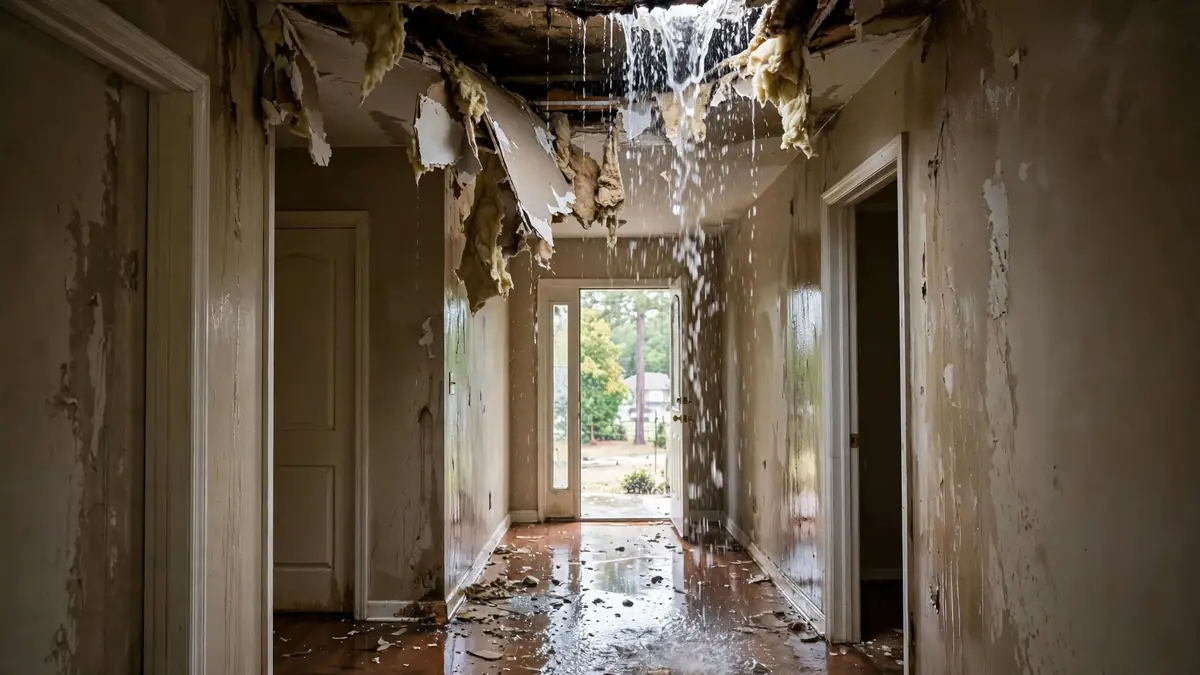
Every hour standing water sits, more of it moves into the carpet pad, under baseboards and up into drywall. Extraction removes far more water than evaporation ever can, which shortens drying and improves the chance that flooring and walls can be saved instead of torn out.
On a slab foundation, water also spreads under flooring into neighboring rooms where it cannot be seen. A crew with moisture meters can find where it went.
How emergency extraction works
- 1
Find the edges
Moisture meters map how far the water has travelled, including under flooring.
- 2
Extract
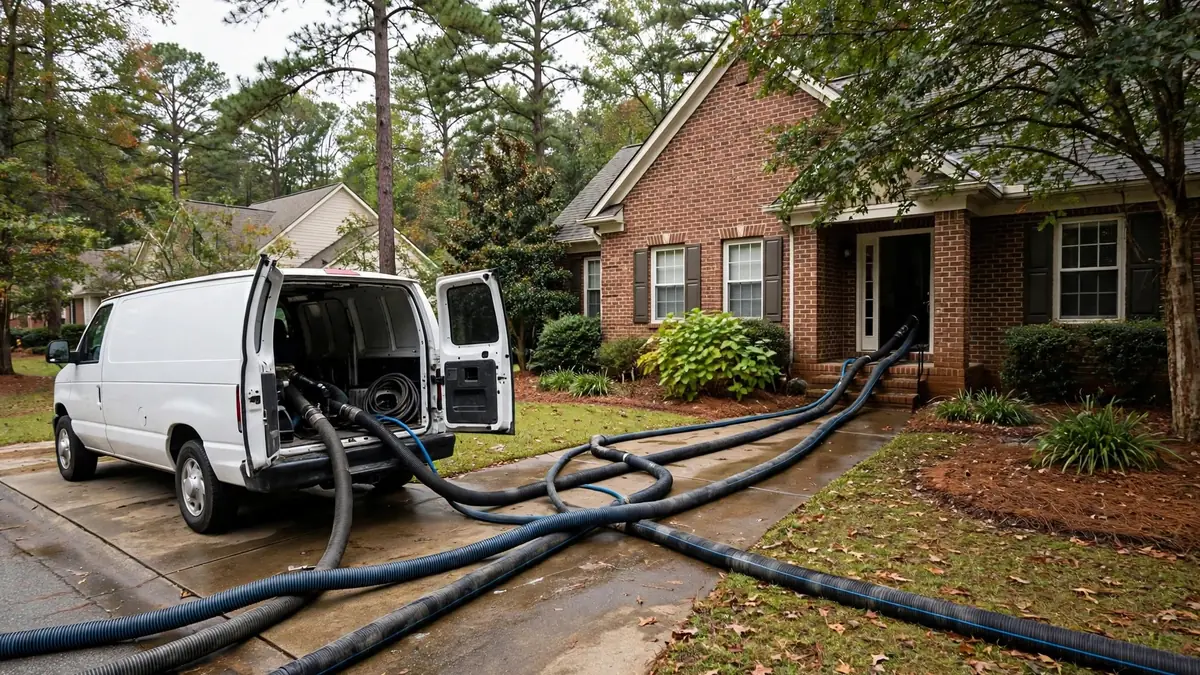
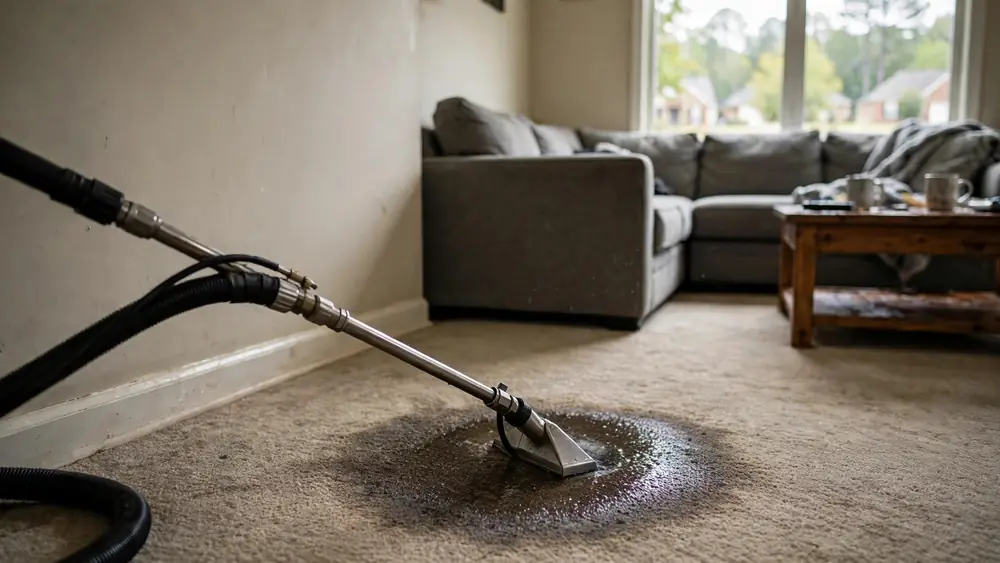
Truck-mounted or portable units pull water from carpet, pad and hard floors.
- 3
Decide on the pad
Carpet pad soaked with anything but clean water is usually removed; clean-water pad can sometimes be dried.
- 4
Start drying
Air movers and dehumidifiers go in straight after, sized to the wet area.
What you can safely do before the crew arrives
- Move small items
Lift rugs, shoes, boxes and electronics off wet floors. - Protect furniture
Put foil or plastic under the legs of anything too heavy to move. - Mop or towel
Soak up what you can on hard floors if the water is clean. - Skip the shop vac on carpet
It removes little from the pad and can spread contamination if the water was not clean.
Extraction questions
Answered 24/7 · No obligation
Standing water in your home?
Call now and say how many rooms are wet.
Last reviewed · How we write these pages